This post may contain affiliate links. If you buy through them we may earn a small commission at no extra cost to you. Read our disclosure.
Open shelves are either the prettiest thing in a room or a dust-covered junk drawer. The difference is almost always about spacing and grouping — not what you own.
Start with anchors
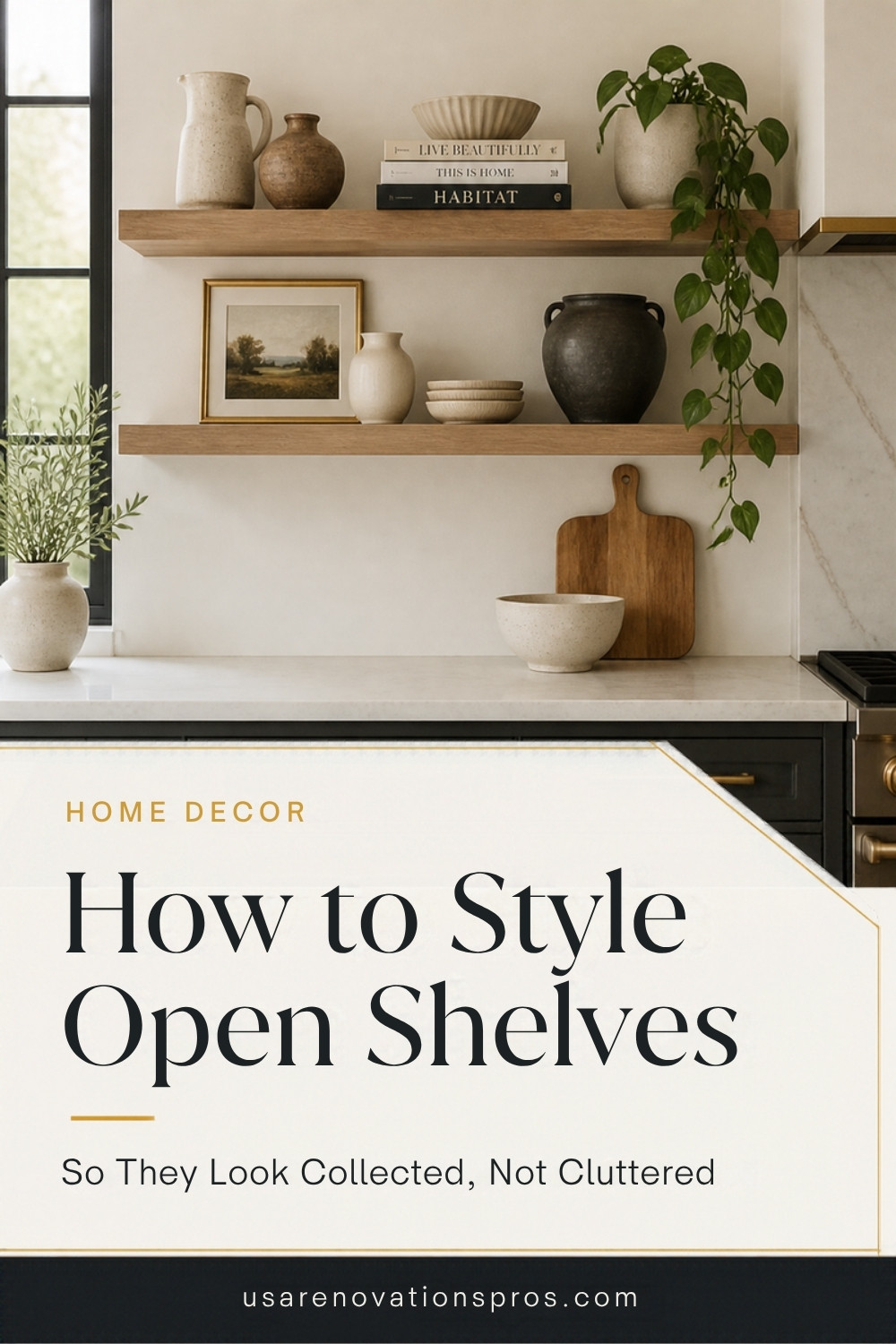
Place your largest items first: a stack of books, a big bowl, a framed print leaning against the wall. Stagger them so no two shelves have an anchor in the same spot — this creates a gentle zig-zag your eye follows.
Group in odd numbers
Threes and fives look intentional. Vary the height inside each group: one tall, one medium, one low.
Mix materials
Pair something glossy (ceramic, glass) with something matte (wood, linen, stone). A trailing plant on the top shelf softens all the straight lines.
Matte stoneware vase trio
Three heights in one set — an instant odd-number group.
- Neutral glaze works anywhere
- Heavy enough not to tip
Leave a third empty
Negative space is what makes shelves feel curated. If a shelf looks full, remove one item, then another. Stop when it feels slightly too sparse — that’s usually just right.